
Presiding Bishop Newsletter December 2017
BC AD DC
A voice cries: “In the wilderness prepare the way of the LORD; make straight in the desert a highway for our God. Every valley shall be lifted up and every mountain and hill be made low; the uneven ground shall become level, and the rough places a plain. And the glory of the LORD shall be revealed, and all flesh shall see it together, for the mouth of the LORD has spoken.” (Isaiah 4:3-5 ESV)
There is a glut of superhero movies on the circuit these days, each one having their own mass following. Many a social commentator has mused about humanity’s obsession with this genre. Ultimately, they say, something deep within us longs for a rescuer and many cultures and eras have given expression to it through various stories and legends. The enduring super-saviour story is a tacit admission that we cannot save ourselves. We need a rescuer, someone like us, but better. Therein lies the truth in the tale.
The Gospel answers the reality of this longing in our hearts as well as the reason behind it. God’s Word tells us the deadly crisis on our planet is sin and only He can save us from it. Many have tried to fulfil this expectation but only One truly accomplishes the task. Jesus is human, like us, but better, God-with-us, Emmanuel. He is able to rescue us by his perfect life and acceptable sacrifice for our sin.
The cry of Isaiah 40:3 is given in the light of the God who comes to rescue His people. Its repeated at the start of each of the four gospels (one of only two Old Testament verses quoted in all the gospels). The fulfilment is not ultimately seen in the return of Israelites from exile (the original context) but in the return of God to a people exiled by their sin. The coming of Christ into the world that marks the beginning of the end of the ultimate exile.
Many Bible teachers rightly pick up on our call to repentance and return to the Lord in Isaiah 40:3, but we must also not miss the following verses and see who really is doing the “returning” work here. Our God comes like a “super-natural hero,” accomplishing what no mere mortals can do. He’s overcoming all obstacles in His path, filling in valleys, flattening mountains, turning tumbled ground into level paths. He will not let anything get in the way of Him rescuing the sin ravaged people He loves.
Yes, we are called to turn from our sin and turn to the Lord (repentance) but in the light of our supernatural rescue this is not a self-saving act. It is a turning away from our own idolatrous self-interests so we can see, receive, and marvel at the awesome salvation our hero has accomplished for us.
Here is the heart of the Christmas message. Here is the reason why we worship the Babe in the manger. God has come to rescue his desperate people and we can only marvel and celebrate at His supernatural plan of salvation.
May God give our preachers grace and power to proclaim the world’s true Saviour this Christmas season.
#WhereisthePB

Confirmation Service St Peters Fish Hoek
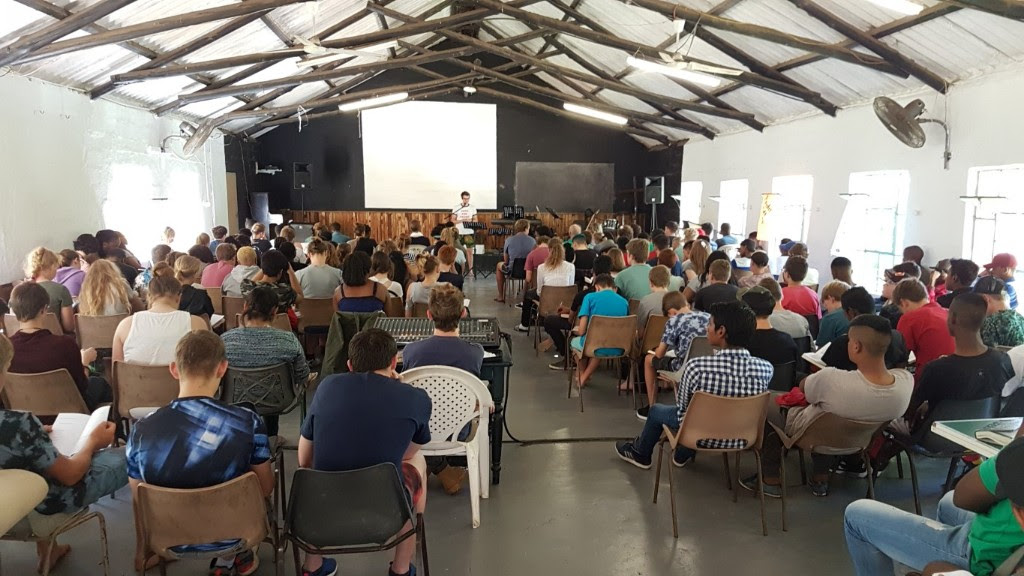
Crossword KZN 2017


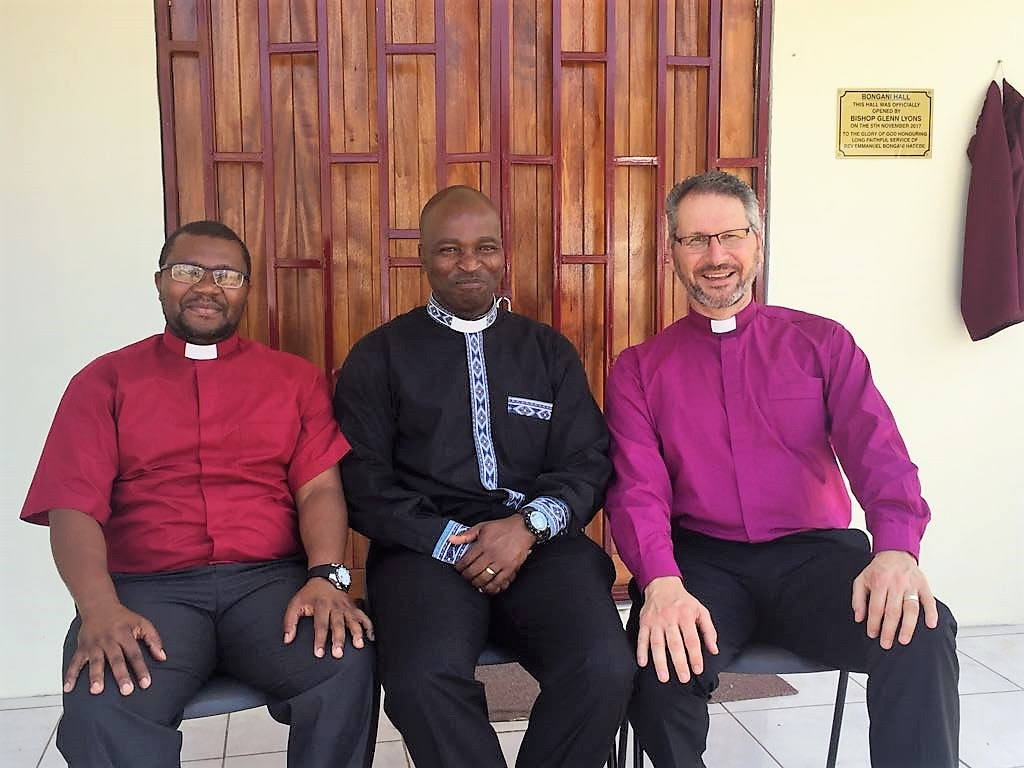

Opening New Buildings for Christ Church Msunduzi

Joining the Christ Church Pinetown team for street outreach

New premises for Christ Church North Coast

Thanksgiving Service Holy Trinity Gardens
Post of the Month
Unashamed Allegiance
- a tribute to RC Sproul, by John Piper
Last word for 2017…
I’m grateful to you all for your ongoing interest and support of the work of REACH-SA and especially for your prayers. The Lord has opened many doors of opportunity for us as well as carried us through many difficulties. I have often been driven to my knees begging God for wisdom and strength to fulfil this challenging task. Jesus will build His church, so let us pray, pray and pray for our God to be at work in us and through us in 2018.
Christmas blessings
Glenn Lyons
Prayer
- Pray for the missionaries sent and supported by REACH-SA churches. Many will not be home over this season. Ask the Lord to sustain and provide for them over this time.
- Pray for a wave of conversions this Christmas season as many visitors will be in our churches.
- Pray for our country and her leaders. There are encouraging signs of new leadership in African but ultimately our future hope lies in people bowing the kneww to the true King of Africa
Guard her children
Guide her leaders
And give her peace
For Jesus Christ's sake
Amen

Perspective - The Greatest Gift Ever Given
“For God so loved the world that He gave His one and only Son” John 3:16
John 3:16 is probably the most famous and most quoted verse in the Bible. It speaks of God’s love and God’s gift, the gift of His One and Only Son, the greatest gift ever given. In a world filled with scepticism, a world in which God is on trial and people act as judge and jury, it is a verse that we need to consider and to proclaim. For this verse speaks of a God who truly loves people, the God who gives rather than takes. But it also speaks of the God who is righteous and just, the God who acts decisively to deal with sin and its consequences, the God who has a plan and a purpose to put all things right. It is thus a verse to answer the sceptic, but it is also a verse to lift up the humble, to encourage the weak, to give hope to the lost.
Firstly, consider the fact that God loved the world. Note that John uses the past tense of the verb ‘love’. This does not of course mean that God does not love the world (present tense) for as John reminds us elsewhere God is love (1 John 4:9). In John 3:16 John’s focus is rather on the love of God in action in our world in a way which is foundational and indeed defines what love is. God’s love is most clearly seen in the fact that God gave (again past tense) His One and Only Son. In the words of 1 John 4:9 -10 “This is how God showed His love among us: He sent His One and Only Son into the world that we might live through Him. This is love, not that we loved God but that He loved us and sent His Son as an atoning sacrifice for our sins”.
Secondly, consider the fact the God loved the world. In speaking about the world John is not referring to the created world but rather the world of fallen, sinful humanity. At the beginning of his Gospel, John spoke about the fact that though the Word was in the world, the world did not recognize Him (John 1:10). It is this fallen, sinful and even hostile world that God sent His Son to save. What a remarkable demonstration of His love and His grace. In the words of Paul, “God demonstrates His own love for us in this: While we were still sinners Christ died for us” (Romans 5:8).
Thirdly, consider the fact that it is God who loved the world and gave His One and Only Son. The phrase ‘one and only’ within John’s Gospel is a reminder of the fact that it was God Himself who acted in the salvation of the world. The Son, who was given and sent, is the Word, the One who created all things, who was with God in the beginning and who is in fact God (see John 1:1-14). Thus John 1:18 speaks of Jesus as ‘God the One and Only who is at the Father’s side.’ God’s love for the world is truly His love. God’s act of love in giving His Son is truly His act. The Son who was given and sent was not some unwilling victim but rather God Himself coming into our world in love to save the world. There are mysteries here, but the main point is clear. As Paul puts it in 2 Corinthians 5:19 – “God was reconciling the world to Himself in Christ.”
This astonishing, life changing, world changing, act of love by God cannot and must not be ignored. To do so is not only foolish but sinful. Our salvation cost God everything. We cannot and must not remain cold or aloof toward what God has done. John 3 :16 continues with the words “…that whoever believes in Him will not perish but have eternal life.” God’s gift of love is the greatest gift ever given. But it is of no benefit if we do not receive it. And the way we do that is ‘by faith’, by acknowledging that we are the ones for whom Jesus the Son was given; by turning away from our proud self-reliance and independence in spiritual matters; by acknowledging our sin; by trusting in Jesus and His atoning death alone for our forgiveness; by receiving Him as the one and only Saviour and Lord. To do that is to receive eternal life; to refuse is to forfeit life and to choose eternal death. Gifts are meant to be received – if you have accepted God’s gift of salvation in Christ, then thank God and live for Him. If you have not yet accepted God’s gift, do so today. Nothing is more important.
Written by Mervyn Eloff
The rise and (down)fall of Modern Spirituality
Modern spirituality claims that it is possible to know God through a variety of ways: whether it be a spiritual encounter, private conviction or an angelic spirit-guide.
God is like buying groceries – it doesn’t really matter which supermarket you shop at, as long as you get bare essentials. Some people might prefer Spar, or Woolworth’s, or Pick n Pay – different strokes for different folks.
This approach to spirituality is by no means new. It’s as misguided today as when the Apostle John first wrote his letter of 1 John.
The trouble was that many of these false teachers or antichrists were promoting their opinions under the guise of Christianity. The false teachers spoke about Jesus, the Spirit and God; but what they were saying was not true. They sounded Christian, but they were antichrist.
Children, it is the last hour, and as you have heard that antichrist is coming, so now many antichrists have come. Therefore we know that it is the last hour. (1 John 2:18)
Antichrists and false teachers
“Anti” means before, against or opposite: these people are against the Jesus of the Bible. They say things like, “Jesus is not relevant”, or that we must understand Jesus in a new way, or they simply downplay his importance.
They are antichrists, and many claimed to be Christian teachers.
How do you know if you a false teacher or an antichrist?
1. You love the world
Do not love the world or the things in the world…And the world is passing away along with its desires, but whoever does the will of God abides forever. (1 John 2:15, 17)
This is a caution to all Christians not to be allured by the world’s promises of prestige and power because the world is passing away. However, this was a particular temptation for the readers because they were being tempted to follow a worldly form of Christianity that the false teachers were promoting.
They (false teachers) are from the world; therefore they speak from the world, and the world listens to them. (1 John 4:5)
The world loves antichrists because their teaching aligns to the world’s priorities: they focus on getting rich, healing and material blessings.
There is little difference between their sermons and self-help seminars.
Sitting in their churches, you would forget that the hope of the gospel is not this world, but eternal life in the world to come.
2. You have moved on from the Apostolic Gospel
They went out from us, but they were not of us; for if they had been of us, they would have continued with us. But they went out, that it might become plain that they all are not of us. (1 John 2:19)
The false teachers started off part of the church believing the gospel that the apostles taught. They looked like orthodox Christian people. But then they left the fold and started preaching another gospel.
They said things like, “we are now led by the Spirit not the word”, “we have to re-interpret the Scriptures for a new age” and, “the gospel is good but to really know God you must…”.
The simple gospel about Jesus who died to propitiate the anger of God at sin (1 John 2:2) was not enough – they needed something more.
By leaving the apostolic teaching, they showed that they were actually not part of the community in the first place – they had not truly believed the gospel.
3. You make bold promises
But you have been anointed by the Holy One, and you all have knowledge. (1 John 2:20)
John used this language of “anointing” because this was the language that the false teachers used. They said, “Come to us to get the anointing and you will have true insight and knowledge.”
John said: You have the anointing! You have knowledge!
The New Testament teaches that the moment you turn to Christ you receive the gift of the Holy Spirit (“the anointing”). John said that his readers knew Jesus and the gospel, and didn’t need the false teachers to teach them. Cf. v27
False teachers always make bold claims about anointing or breakthrough or victory or whatever.
4. You teach a false Jesus
Who is the liar but he who denies that Jesus is the Christ? (1 John 2:22)
What’s important to realise here is that the false teachers weren’t denying Jesus per say. They spoke about Jesus a lot – if they didn’t speak about Jesus, the readers would never have been tempted to follow them.
But the Jesus they spoke about was not the Jesus that the apostles’ proclaimed, nor the Jesus that died to propitiate the anger of God at sin (1 John 2:2).
If you never talk about sin (1 John 1:8) or God’s judgment, you will never talk about the cross that placated God’s anger. The antichrists were promoting a “Jesus” Christianity, but it was not a “cross” Christianity – but if you remove the cross, it’s no longer Christianity.
Antichrists talk about Jesus, the Spirit, breakthroughs, anointing, maximizing potential, planting a seed, healing, prosperity and a host of other things. But they never talk about the cross of Christ that placated the anger of God at sin.
Antidote
What is the antidote to false teachers?
Let what you heard from the beginning abide in you. If what you heard from the beginning abides in you, then you too will abide in the Son and in the Father. And this is the promise that he made to us—eternal life. (1 John 2:24-25)
The antidote is to let what you heard from the beginning (the apostolic gospel) abide in you.
Keep believing the simple truth about Jesus that you find in your Bible.
Don’t be deceived by anyone claiming a new spirituality or a better version of Christianity.
If you are in a church lead by a false teacher, be sure you move to one where the Bible is clearly taught and you are constantly reminded of the unchanging, Apostolic Gospel.
Written by Andre Visagie. Original article can be found here.
The Christians’ struggle with sin
Often as Christians we’re discouraged by sin in our lives. We’ve come to faith in Jesus, we’ve received the gift of the Holy Spirit and we want to life lives that honour God.
And yet we still lose our temper, still succumb to sexual sin, still covet our neighbour’s donkey or BMW, still tell lies, still steal lustful looks, still gossip at work, and still think racist thoughts. We continue to sin.
We may be overcome with a sense of failure and disappointment.
We may lose our assurance that we belong to God.
We are generally tempted in two ways when we sin:
Either to throw in the towel and stop fighting against sin, “I’m a terrible Christian anyway, what’s the point?”
Or we’re tempted to believe those promising a better, more victorious version of Christianity.
The Apostle John wrote the letter of 1 John to assure his readers that they were children of God because they abide in Jesus, despite their struggle with sin. Indeed, the struggle (more like war!) with sin is part of the normal Christian life.
Are you continually struggling with and harassed by sin?
Welcome to the Christian life.
Don’t throw in the towel.
Don’t be deceived by those promoting a more spiritual, victorious brand of Christianity.
Children of God
Notice the first few words of 1 John 2:28
And now, little children (Christians), abide in him…
The “now” that John speaks about refers back to v18 where he said that we are living in the “last hour”, the final era of history as we know it. We must make sure that we are abiding and remaining in Jesus.
We’re not to be led astray be those wanting to mislead us, but continue to believe the gospel the Apostles proclaimed (that we find in our Bibles).
If we abide in Christ, what is true of us?
See what kind of love the Father has given to us, that we should be called children of God; and so we are. (1 John 3:1)
We are children of God! Fact.
As Christians, we may be struggling with sin, but we can know that we are children of God.
How have we become children of God?
Out of his great love (not because of our good deeds or religious observances), God the Father (3:1) gave Jesus to be the propitiation for our sins (2:2) so that our sins may be forgiven and we could be adopted into God’s family.
Not what we will be
Not only are we children of God, but we are not yet what we will be
Beloved, we are God’s children now, and what we will be has not yet appeared; but we know that when he appears we shall be like him, because we shall see him as he is. (1 John 3:2)
This verse is referring to the second appearing of Jesus. Jesus said he that will appear for a second time when he physically returns to the world on the clouds of heaven in the Father’s glory. Not as a baby, but as he truly is – God’s reigning King.
God will save those who abide in Jesus and then we will be like Jesus i.e. without sin.
We are not without sin now – we struggle with sin now – but then we will be without sin.
Dear Christian, don’t expect to be sinless now.
Remember what John said about sin in 1 John 1:
If we say we have no sin, we deceive ourselves, and the truth is not in us. (1:8)
Sin remains an issue for the Christian because, although we are Children of God, we are not yet what we will be.
However, when we do sin our response to that sin is not to abide or remain in sin, but:
If we confess our sins, he is faithful and just to forgive us our sins and to cleanse us from all unrighteousness. (1:9)
Christians confess and turn from sin, knowing that Jesus died for their sins to be forgiven.
Don’t be deceived by those promoting a better, more spiritual, brand of Christianity that promises complete victory over sin – it’s not possible.
Hate sin. Fight sin. Struggle with sin. Confess sin. Kill sin.
Every day.
Written by Andre Visagie. Original article can be found here.
Perspective - Generosity
“Command them to do good, to be rich in good deeds, and to be generous and willing to share” (1 Timothy 6:18)
The words quoted above are part of Paul’s closing instruction to Timothy and are directed to those who are “rich in this present world” (6:17). We may think that these words don’t apply to us, but that is because we most often compare ourselves with the ‘Super Rich’ (which we aren’t), rather than comparing ourselves with those who are truly poor. Certainly, in the South African context it would be fair to admit that compared to the vast majority of the population we are in fact rich. Either way, Paul’s words are a challenge to us when it comes to our attitude toward material possessions.
Paul begins by warning against two common dangers that accompany wealth – the danger of becoming arrogant and thus looking down on others (6:17) and the danger of trusting in our wealth rather than in God (6:17). Both these dangers can be resisted if we in fact remember a simple but important truth, namely, that everything we have is a gift from God! Paul’s words are striking for he reminds us that God is Himself generous. He richly provides us with all that we need not only for our survival, but for our enjoyment. God is generous, and part of His own generosity lies in His desire to see us enjoy what He gives us. He wants us to be thankful and humble, but He certainly is not against us enjoying what He has given.
The problem however comes when our enjoyment of God’s good gifts is not accompanied by generosity with God’s good gifts. For the surprising and liberating truth about all of God’s gifts is that they are most enjoyed when they are shared. Thus, Paul commands the rich not merely to be humble and to keep their trust in the right place, but also “to do good and to be rich in good deeds and to be generous and willing to share” (6:18). At first this sounds like the same point, but what the repetition does is to tell the rich how to do good, namely by being rich in good deeds, and that such good deeds should be done joyfully and willingly rather than begrudgingly, generously rather than in a miserly way. We are thus called to be imitators of the Lord Himself who “richly provides us with everything”.
The fact that everything we have is a gift from the Lord and the calling to imitate the Lord in His generosity should be motivation enough for us to heed Paul’s command to be generous. But Paul adds another motivation, perhaps because he understands how easy it is for us to become self-centred with our possessions. And so, he appeals to our self-interest by reminding us that our generosity is part of the way in which we store up treasure in Heaven. Both the language Paul uses and the point that he makes is drawn from Jesus’ own teaching. In the Sermon on the Mount (Matthew 6:19-24), Jesus commanded His disciples not to store up treasures on earth where they are prone to decay or vulnerable to theft, but rather to store up treasure in Heaven. He reminded them and us that the way we handle our earthly wealth is a reflection of what or who we serve and thus a reflection of our hearts. A choice had to be made because we cannot serve both God and money. But Jesus did not go on to teach us how to store up treasure in Heaven. Paul elaborates on Jesus’ teaching about money and teaches us how to store up heavenly treasure. We store up treasure in Heaven by trusting daily in the Lord, not in our earthly treasures, and by doing good with our treasure on earth, by being generous and willing to share.
All of this of course requires wisdom as well as clear Gospel thinking. We are not called to give to all in need, indiscriminately, nor are we expected to support every appeal that comes to our attention. What we have is God’s gift to us and along with that gift comes the very real responsibility to be good stewards. As Christians we are expected to support Gospel work both in our local church and across the world. And as Christians we are expected to be generous and caring to those in need. Who, how much, how and where is a matter between us and the Lord. We should ask God for His wisdom and then act in the light of the conviction that the Spirit of God places in our hearts. But we should note that what Paul writes and what Jesus taught was not a suggestion. It was and is a command that we should obey, both for God’s glory and for our good.
Written by Mervyn Eloff. Original article can be found here.
Presiding Bishop Newsletter October 2017
Tomorrow we celebrate one of historys most momentous events. The Protestant Reformation. In October 1517 Martin Luther lodged a protest against an almost pagan Medieval Roman Church that has continued to have a ripple effect into our 21st century. Martin Luther and the other Reformers rediscovered the Biblical doctrines of grace that have become the heartcry of believers around the world. The good news of the gospel is that sinners are saved by Grace Alone through Faith Alone in Christ Alone as revealed in Scripture alone to the glory of God alone. Amen!
I hope you enjoyed the many memorials, seminars, studies and celebrations that happened in our churches, particularly over this Reformation weekend.
REACH 500
Our REACH500 campaign has certainly been hugely successful from an activity point of view. The goal was for each local church to share the gospel with 500+ people in this 500th anniversary year of the Reformation. We continue to receive reports of gospel events and opportunities from across the country. Some of our congregations have passed the 500 mark and others are continuing into the next year. Phase two of this challenge will be the READ-500 challenge which picks up on the discipleship angle of evangelism. Each region in our country is being challenged to produce 500 people who read the Bible 1-2-1 with 500 others. Already there is much excitement and planning with regards to this goal.
Of course with all this outreach and Bible activity we are not surprised at the opposition we are experiencing from the evil one and sinful natures. Let us not forget to pray without ceasing for our gospel work and cry out to the Lord for souls to be saved. Our country is facing many desperate struggles with terrible crime levels in cities, townships and farms. Many are expressing a lack of confidence in the government and economy. We know that the only hope for our land is Jesus so let us pray for our country and hold out Christ to her people. UJesu nathi. We need not fear.
Namibia News

Where is the PB
|

|

|

|

|

|

|

|

|

|

Post of the Month
The History of the Reformation
- by R.C Sproul
Prayer
-
Give thanks to God for new four new church plants in REACH-SA this year. Pray for growth during the critical early stages of their ministries.
-
Pray regularly for all our gospel workers, ministers and bishops. Things get very pressured as we head to the Christmas season.
-
Remember our Administrator, James Schonegevel and his family on the passing of his mother this week.
-
Continue to pray for Bishop Jomo Mchunu and give thanks for early signs of positive response to recent cancer treatment.
Perspective - True Freedom
“If the Son sets you free you will be free indeed” John 8:36
This October we celebrate 49 years of God’s grace at St James. How thankful we can be for all that the Lord has done, as we trust Him for future blessings.
In the Bible the number 7 and its multiples are important numbers. In Genesis 2 we read that God rested from His creation work on the 7th day, declaring it holy, a Sabbath day. Israel were thus commanded to honour the Sabbath both in remembrance of God the Creator and, after their deliverance from Egypt, also in remembrance of God their Redeemer (compare Exodus 20:8-11 with Deuteronomy 5:12-14). In the Book of Revelation, the number 7 represents God and His perfections. And, of particular significance for our 49th birthday as a church, we note in Leviticus 25:8-54, that the 49th year ushers in the year of Jubilee, a year to remember the freedom that God’s people enjoy because He has redeemed them from slavery. For Israel that meant remembering their deliverance from bondage in Egypt and living practically as the free people of God. For us today it means remembering the even greater deliverance from the penalty and power of sin that Jesus has brought about. It is this greater deliverance and the true freedom that flows from it that Jesus is speaking about in John 8:34-36.
The first thing to note from these very striking verses is Jesus’ diagnosis of the problem that every person faces. Jesus says, “everyone who sins is a slave to sin” (vs34). According to Jesus it is thus not just our actual sins which are the problem, but our sinfulness – our heart and mind slavery to sin. This is what Martin Luther; the father of the Protestant Reformation was referring to when he wrote about the bondage of the will. Thus, if we are truly to be liberated we need to be freed not just from the penalty of our sins but also from the power of sin itself. In John 8:36 Jesus makes an extraordinary promise, a promise that He, the Divine Son, has the power to bring this redemption, a redemption which no amount of religious ritual or zeal, no matter how sincere, could ever accomplish.
The second thing to notice is that the moment we come to Jesus to be liberated in this way, we cease to be slaves and become children within God’s family. Jesus is of course the eternal Son of God who has come to dwell among us (John 8:36 cf John 1:14). But as the Son of God He came not only to make God known (John 1:18) but also “to take away the sins of the world” (John 1:29). In other words, the Son came into the world so that He could set us free from the penalty and power of sin and thus usher in the age of Jubilee, the age of true freedom. And so, John 1:12 tells us that all who believe in His Name, receive the right to become “children of God”. The Son of God who sets us free turns slaves into sons and daughters of God. What amazing grace from the One who came full of grace and truth!
The third thing to note is the element of free choice that is involved in all of this. We do not have free will, for by nature our each and every person’s will is in bondage to sin. But we are not automatons, flesh and blood robots governed by impersonal force. God has created us with both the ability and the responsibility to choose. Thus, in John 8 we find Jesus urging us, as He did His original hearers, to make sure that we are truly His disciples (vs31). How do we do that? In the very next verse Jesus says that those who are truly His disciples will “know the truth” and “be set free by the truth”. Later (vs36) He says that those who are truly His disciples are the ones whom the Son has set free. What are we to make of this? Well simply this. The truth which sets people free and which we are to know is not academic, impersonal truth but rather a Person, the One who is the Truth (John 14:6). As John 1:12 put it, it is as we receive Jesus and believe in His name, that we benefit from the freedom He brings and come to be children of God. And then John goes on to speak of the miracle of grace – for he reminds us that even this receiving and believing is the result of being born of God.
The question is this: Do you want to know the true freedom that Jesus, the Son brings? Then come to Him and put your faith in Him, asking Him to set you free. Do you feel unable to do this? Then ask the God the Father, the giver of new birth, to give you the ability to believe the truth about Jesus and to discover for yourself that the truth really does set us free.
Written by Mervyn Eloff. Original article can be found here.
Does your church talk about sin?
Gurmeet Ram Rahim is a charismatic Indian guru known as one of the so-called Indian godmen.
These godmen, who follow a strain of Hinduism, have a high-profile presence, have thousands of devotees, and claim to possess paranormal powers. They claim to have attained a higher level of spirituality.
It turns out that he and his close followers were involved in the sexual exploitation of many, many girls. He is a self-proclaimed teacher, claiming a higher spirituality, deceiving and exploiting others.
Unfortunately, we have a similar phenomenon in the Christian world as well: self-proclaimed teachers, claiming a higher spirituality, yet deceiving and exploiting others.
It also happened in the Apostle John’s time – that’s why he wrote the letter we know as 1 John – and it happens today. John wanted Christians to know that the gospel they had believed was the real, authentic thing – leading to eternal life. (1 John 5:13) John warned Christians not to be deceived by false teachers.
The false teachers talked about Jesus, claimed to have the anointing, claimed a higher spiritually, claimed to have stopped sinning, and claimed to have true fellowship with God.
In stark contrast, what did the Apostle John say is the hallmark of authentic Christianity?
This is the message we have heard from him and proclaim to you, that God is light, and in him is no darkness at all.
If we say we have fellowship with him while we walk in darkness, we lie and do not practice the truth. (1 John 1:5-6)
The false teachers were claiming fellowship with God, but their lives were characterized by darkness and full of greed and immorality.
They claimed to be Christian leaders, but their lives showed that they were liars and deceivers.
Darkness
I chatted this week with a friend who has a thriving, gospel ministry among refugee women from elsewhere in Africa.
She explained that she has not met one pastor in the area she ministers who is legitimate. The pastors all run their churches as businesses to fund their stay in South Africa.
Recently, one of those pastors was arrested for child abuse. He was granted R1 000 bail. His wife, the “prophetess”, told the church that he was granted bail of R20 000, which the church needed to raise. He paid the R1 000 and pocketed the rest.
Our world is full of men and women who claim to be Christian leaders, but walk in darkness and exploit and deceive those under their care.
The opposite should be true for Christians and Christian leaders.
But if we walk in the light, as he is in the light, we have fellowship with one another, and the blood of Jesus his Son cleanses us from all sin. (1:7)
If we claim to have fellowship with God, who is light, our lives should be characterized by light and holiness and righteousness – not perfection but progress.
Of course, we do sin, but that’s not the characteristic of our lives.
When we do sin, we know that the blood (death) of Jesus cleanses us from all sin.
Note the attitude of the false teachers to sin:
If we say we have no sin, we deceive ourselves, and the truth is not in us. (1:8)
Very often false teachers claim to have no sin. They say things like, “Since we’ve reached this higher spirituality and received the anointing, we no longer struggle with sin. We’ve found the key to true spiritual victory and now live in the power of the Spirit.”
In the churches of false Christian leaders, they don’t talk about sin.
They talk about Jesus, power, the anointing, and the Spirit – but never sin. Which is very strange, because John says in 3:5 that Jesus came precisely to take away sin.
They were making bold claims, but they were liars and God’s word was not in them.
Light
What is the authentic Christian response to sin?
If we confess our sins, he is faithful and just to forgive us our sins and to cleanse us from all unrighteousness. (1:9)
We regularly acknowledge our sins before God and turn away from them, knowing that God forgives our sins on the grounds of Jesus death for us.
It’s not that we don’t sin, but when we do sin we confess our sin.
Do you struggle with sin? Is it a constant battle? Good, join the club.
God is light, in him is no darkness at all, we too should absolutely despise sin, whatever it may be, with a holy hatred.
We should pray, “Lord help me not to sin. Help me to hate sin.”
We don’t deny the reality of sin in our lives, but confess our sins and do battle with sin – which is why at our church we always have a prayer of confession in our services.
♣
Don’t be deceived by the myriad of false teachers claiming a better, more spectacular form of Christianity.
Don’t be deceived by the “Christian” leaders who look strikingly similar to the godmen of India.
Don’t be taken in by their bold claims, higher spirituality and seemingly supernatural ministries.
Don’t be taken in by their talk of power and victory.
Perspective - A Delicate Balance
"Fear God, honour the King." 1 Peter 2:17
The words quoted above form part of the Apostle Peter's exhortation to his readers that, by their good deeds, they should be witnesses for Christ before a watching and sometimes even hostile world. In such a world, Christians were (and are) misunderstood and misrepresented. Peter's deep concern was that, as far as it depended on believers, the grounds for such misunderstanding and misrepresentation be removed. As he puts it in 1 Peter 2:15: "It is God's will that by doing good you should silence the ignorant talk of foolish people."
One of the areas in which Peter instructed believers to 'do good' was in their relationship to the authority structures which the Lord had placed within His world, not least the authority structures governing the State. The paragraph which ends with the words quoted above in fact begins with the command: "Submit yourselves for the Lord's sake to every authority instituted among men: whether to the king as the supreme authority, or to governors who are by him to punish those who do wrong and commend those who do right" (1 Peter 2:13-14). This is a striking command since it not only calls for submission but also defines what the secular authorities are meant to do, at least as far as right and wrong are concerned. From this command, we learn that all State officials from the greatest to the least derive their authority from the Lord and will therefore have to give an account to the Lord for the way in which they govern. This is a comforting thought especially at times when those in authority do not fulfil their God given mandate of governing according to God's standards of right and wrong.
But the fact remains that notwithstanding the quality of those who govern, Christian citizens are to be in submission to the authorities and thus to prove themselves to be good and loyal citizens. The challenge comes when the authority of the State comes into direct conflict with the authority of God. What are Christians to do in a case like that? And that is precisely where the words quoted above come in to play. As Christians, we are to fear God and honour the King - two commands, but in that order! In other words, as Christians our prior loyalty and obligation is to God our Creator and Saviour. God's Word in the Bible is and must be the final authority by which we live our lives. We can and should honour the king, and submit to the laws of the State, but only insofar as they don't contravene what God has said. Where that happens, we have to obey the Lord God, fearing (i.e. revering) Him as the supreme Lord to whom everyone including the King must give an account. But the flip side is also true and needs to be stated just as clearly. Wherever the authority of the State is not in conflict with the Word of God, we are to submit to the laws and requirements of the State, whether we like them or not. As Christians, we are to be good citizens - indeed the best citizens - in all that is good and right.
Needless to say, this requires a good deal of careful thought and discernment on the part of every believer. We need to understand what is required of us as citizens, weigh these things according to the Word of God and make an informed decision. This of course means that we need to know what God's Word says, not just about forgiveness and eternal destiny, but also about the complex realities of daily life in a fallen world. Although no Christian is bound by party politics, no believer can avoid the realities of politics itself. We live in a political world and we would do well to think politics through prayerfully and carefully in the light of God's Word and with the help of God's Spirit. In this way in fact we will avoid the emotive sweep of political rabble rousing and be in a position to make mature and wise decisions for ourselves.
One corollary of this is also that we will not judge or despise our fellow believers on the basis of their particular party-political affiliation. The truth is that while some political parties may be better than others, no political party has a monopoly on truth or righteousness and all of them will fail in one way or another. The best we can hope and indeed pray for are politicians who however else they may disagree, have a clear sense of Right and Wrong and a proper sense of accountability to God. For experience shows, contrary to the claims of those who see God as a hindrance to good governance, that those who fear God, know how to honour the King as well as serve the people they are called to serve.
Written by Mervyn Eloff. Original article can be found here.
Bishop Glenn Lyons’ Charge – 2017

To view and download a PDF version of the Charge click here.
Presiding Bishop’s Charge
Synod 2017
Greetings to you all in the name of our Lord and Saviour, Jesus Christ.
It is a great privilege for me to be bringing the Synod Charge on this historic anniversary year. Next month we commemorate the 500th anniversary of Martin Luther’s watershed Wittenberg protest and celebrate the ripple effect of the Reformation down to this very day.
The Church of England in South Africa is a direct descendant of the English Reformation and we give thanks to God that today we still stand on the doctrines of Grace and the Reformation distinctives that mark the orthodox Church of England. Our African Protestant church has grown from a few faithful congregations to a busy denomination of 150 churches with hundreds of full time workers – including 120 clergy and 7 bishops. From our local churches we have also seen many other ministries established in our communities. (Mercy ministries, student ministries, schools, creches and other para-church arms). Thousands of people have come to repentance and faith in Christ through the ministries and members of REACH-South Africa.
George Whitefield College was birthed through REACH-SA and is now one of Africa’s leading study centres for Reformed Evangelical Anglican Theology. The official training college of our denomination is also producing many graduates who are making an impact for the gospel not just in REACH-SA but in denominations and communities all across Africa.
Added to all this we also have several associate and affiliated churches in Namibia, Zimbabwe, Malawi, Mozambique and the DRC. Many churches in these southern African countries are church plants via REACH-SA churches and/or GWC graduates.
We must not also overlook the many missionaries who have gone out from REACH-SA churches into all the corners of the world.
When we look at what God has accomplished in 500 years of Reformation history at and what He has brought about in over 200 years of Evangelical Anglican ministry in southern Africa we can only say, glory be to God alone for all He has done in us and through us for Christ.
It is especially appropriate on this historic anniversary year to be able to officially add a new volume to our own history. Rev. Brian Cameron very kindly agreed to write “The Candle Still Burns” as a follow on from Tony Ive’s comprehensive historical record, ‘A Candle Burns in Africa’1. I am so pleased to officially launch the new edition at this synod and we give grateful thanks to Brian for his faithful labour in this project.
I feel I am speaking as someone who is reluctant to admit that he is fast becoming part of the “old guard” but I want to encourage our younger ministers and members to read both of these volumes if they have not already done so. We must not forget where we have come from, nor take lightly the high price many paid for us to be where we are today.
It’s possible some are not even aware that the “candle” title refers to the great statement of Bishop Latimer to Bishop Ridley in 1555, as they were about to be burned at the stake for refusing to recant the doctrines of grace. “Be of good comfort, Master Ridley, and play the man! We shall this day light such a candle by God’s grace in England, as I trust shall never be put out.” Those words have proved prophetically true as here on the southern end of Africa, in the 21st century, that candle still burns.
When I read about the sacrificial lives of the Reformers and other historic servants of the Word I feel some shame that I complain about so mild an opposition that many of us face today. The worst burn we will experience will probably come through social media but many of those early Anglican Reformers and ministers lost their lives to the flames for the sake of Christ.
We should all be concerned by the mild Christianity so much of society approves of today. We are surrounded by compromise and conformity to the world rather than transformation in Christ. We live in the times when many prefer to preserve their popularity by preaching the spirit of the age rather than the true Gospel of grace to repentant sinners. Be aware too that this pressure can be very subtle. It’s possible to sound orthodox but gingerly avoid treading on any sensitive issues that could offend modern society’s sentiments. We must be on our guard against the dangerous desire for popularity at the expense of Biblical truth.
“Woe to you when everyone speaks well of you,
for that is how their ancestors treated the false prophets.” (Luke 6:26)
Our Local Churches
It is such a delight and an honour to be able to visit our local churches and see so many of our faithful workers serving the Master. Several of our men and women labour for the Lord in the midst of very difficult circumstances.
Several of our REACH congregations are growing not just in numbers but also in their members’ commitment to maturity and ministry involvement. I also notice, however, that other churches just don’t seem to be able to make any headway, even after many years ministry. From personal experience, I know how discouraging it can be to see other gospel preaching churches flourishing while yours is not. In this regard, we should firstly avoid the trap of competitively comparing ourselves to others, which is pure pride. Each one of us will ultimately give an account of our stewardship to the Lord alone (Luke 12:35f; 1Cor.3:10f; 2Cor.5:10). It is right, however, to be examining our own ministry in the Light of the Lord’s expectations and with that perspective we can then benefit from the insight of our fellow gospel workers as we sharpen one another in our calling.
I have realized, from bitter experience, that the biggest problem in my ministry is me. I’m often blind to my own faults but so easily see the faults of others. Looking back over my pastoral ministry years I would have welcomed someone who administered the wounds of a friend in order to help me serve the Lord more effectively. I have had to constantly learn to put away my pride, recognize my weaknesses and humbly accept the wisdom and advice of others.
From my reading, experience and visits with many pastors, here are five consistent features of effective, Biblical, local church ministry.
i. Clear Leadership: Its popular these days to promote the team ministry model for a local church. I certainly support and encourage that practice as it has a strong Biblical basis. I do want to add, however, that we must not negate the important role of the leader of that ministry team. The Bible is full of examples of individual leaders who have been used by God to pioneer ministry and give direction to God’s people. Our own Episcopal system recognizes that reality. In our REACH-SA structures it is the Rector’s task to drive the overall vision and direction of the local church. This is the case because Christian leadership is centred around a solid Bible teaching and preaching ministry. I know that there have been many church growth books advocating the importance of team ministry and community centred ministry and there is much good and helpful truth in this. We must beware, however, of swinging completely away from the vital role of the Rector and the lead he must give from the pulpit.
A local church cannot do without a godly leader who gives clear, wise and Biblical direction to God’s people. Good leaders don’t just lead by consensus, they lead by conviction, a conviction that is nurtured and shaped by the truth of God’s Word and a heart for God’s people.
Learning how to lead a ministry team of employees and volunteers is challenging. Not all of us have the gift but all of us in leadership positions can learn to be better at it. I believe that many of us need to upskill in this area of local church leadership. It is to this end that we are looking at including Biblical Leadership modules in a future curacy training program. I hope to give more feedback on this in time.
Resources: Wisdom in Leadership – Craig Hamilton (Matthias) www.ThomRainer.com
ii. Ministry Purpose: Effective churches have a plan and they put it into practice. I’m talking about more than having a mission statement. Many church noticeboards display a vision statement that never seems to go further than the Sunday bulletin or annual vestry meeting. An effective church unpacks their vision into the daily life of the church family. It makes a big difference to the health of a local church when everyone knows what they are there for and so play their part more effectively.
A local church living out what it means to be God’s family is a very attractive witness to the nations. We are in a world full of lost people, most go with the flow of society because they don’t know where they are going themselves. Others latch on to false religions or even cults purely because these organizations offer some sort of security and direction in life. In the light of this, it would be nothing less than failure for the local church not to reflect its God given purpose to the world. Jesus saved and sent us to evangelise the lost and disciple the found. We must be about the work of the Master in an intentional way with a clear strategy for our context, under the direction of the Word of God.
Space limits me from saying more on this, but I must add how grateful we are to have Generate playing a role in helping to equip our ministers with tools for more effective church growth as well as ministry and leadership. They provide regular workshops, seminars and conferences which every local church minister should not miss.
iii. People Matter: We know and teach that the local church grows and functions around the centrality of the Word of God. We hold to our REACH-SA motto of “God’s Word Above All Things”. The question is, how does this really look in a local church? Do we connect the Word of God to people in sincere and loving way? Or do we just hold it up above our heads? It may be a surprise to some but in this social media age, people are desperate for genuine relationships. Social media and technology are poor and often unhelpful substitutes for warm hearted gospel friendships. To this end personal discipleship is clearly the key to the health of the local church. Real people connecting with real people around the Bible grows God’s Kingdom. It’s great to have programs and courses but if we do not communicate a genuine love for people (lost and found) we will not be effective in God’s work.
Even evangelism cannot be separated from relational discipleship. It was popular for a time to have “altar call Christianity” as the climactic feature of church ministry. The danger is that we could end up with good evangelism response statistics but very few real disciples. Jesus did not separate mission and evangelism from discipleship:
19 Therefore go and make disciples of all nations, baptizing them in the name of the Father and of the Son and of the Holy Spirit, 20 and teaching them to obey everything I have commanded you. And surely I am with you always, to the very end of the age.” (Matthew 28:19-20)
True converts are disciples of Jesus, not just acknowledgers of Him. The great commission also teaches us just how people centred our mission is, both in distance and diversity. If we are doing ministry without a passion for people of all nations (regardless of ethnicity, gender, culture etc) we are clearly in the wrong place. Our goal is winning people to Christ and helping them grow to maturity in Christ. This takes a Cross centred love for God and for people and intentional life engagement with them. It’s what our Christian love is all about (1 John4:7f).
Resources:
Marshall & Payne (2016) The Vine Project (Matthias)
Armes, LeRoy (1978) The Lost Art of Disciple Making (Zondervan)
iv. Expository Teaching: True church growth does not happen without able Bible teachers and preachers who labour intensely and faithfully at their task. I say this conscious that God is sovereign and can even make the stones cry out if He wanted to but the reality is that a gifted and faithful Bible teacher will gather more people than a poor one, even if his leadership skills are lacking and the church roof leaks. God’s people will overlook many shortfalls if they are being properly fed.
We must beware of resting on our laurels with regards to our Bible teaching reputation. Many of the “new generation” churches are recognising the importance of Bible teaching and are honing their skills. We must ensure that we do not coast on our reputation in this area but strive to be even more excellent in our God given task.
To that end, there is a very important place for ongoing training in our teaching and preaching ministries. All of us must not stop learning, especially those of us in full time ministry. We should be occupied with private studies as well as attending regular seminars, conferences or even post-graduate study. I appeal to all our local church council members to ensure your ministers attend the regular Bible and Preaching conferences which REACH-SA and GWC offer.
This year we were also pleased to see the launch of the Simeon Trust Bible Exposition workshops in South Africa. The first workshops attracted pastors and Bible teachers from a variety of church backgrounds and were very well received. I trust that those who missed out on the initial meetings will be first in the queue for the next ones.
www.simeontrust.crossword.org.za
Recommended Resources
Ash, Christopher (2009) The Priority of Preaching (Christian Focus) Bartholomew, Craig (2015) Excellent Preaching (Lexham Press) Helm, David (2014) Expositional Preaching (Crossway)
Lastly, I must include what may seem obvious but needs to be stressed.
v. Personal Holiness: Without Godly men and women all the skills and programs in the church are useless. Remember that the Biblical qualifications for leadership in God’s church emphasise godly character before teaching ability (1 Timothy 3:1-13; Titus 1:5-9). It is right to look for the most gifted workers for our churches but it’s also true that godly men and women with limited gifts have always been better used by the Lord than gifted delinquents.
Friends, we must remain vigilant in this area. Perhaps even instilling a new type of regular fast from technology in order to aid and grow our spiritual disciplines. We will all be poorer for lack of personal growth in godliness and our ministries will reflect it in some way. It may well be true that the most important charge you need to hear at this Synod is the call to return to the daily disciplines of the Word and prayer.
Lord make us heed that call.
Our Denomination
As I begin my third year as Presiding Bishop I want to say how grateful I am to the Lord for my REACH-SA family. Your kindness, prayers and support have been humbling and greatly encouraging. To put it plainly, it’s been difficult to leave much of my local church ministry and undertake a role that demands a different level of leadership, service and activity. I have often been driven to my knees, wondering how the Lord can give so weak a servant so great a responsibility. Yet God is sovereign and chooses the foolish to shame the wise. ‘So I will boast all the more gladly about my weaknesses, so that Christ’s power may rest on me.’ (2 Cor.12:9)
National Strategy: In Synod 2015 we were alerted to the disturbing plateau in denominational growth. Since then we have seen encouraging signs of change as we increased our focus on funding new churches and raising and training new workers. We have had excellent numbers of enrolments at GWC and an encouraging start to our church plant incentive. The New Projects Fund has provided “kick start” funding for 4 church plants and there are 2 more pending. We hope to hear more about these plants during our synod.
Four new plants are an exciting development and I am praying for further workers and funding to help us reach the goal of 10 established church plants before my initial 5 year term is complete. This can be achieved (and even more) but it will require persistent prayer, bold faith and selfless co-operation.
National Leadership: I am very thankful to God for our Bishops and other national leaders (Executive and Trustees) who give so much of their time to the concerns of our denomination. I have also found, to my own frequent disappointment, that the more I stretch myself across the ministry spectrum the less effective I am. It is for this reason that I have asked my fellow bishops to take national responsibility for specific ministry arms rather than having us all carry oversight for every ministry in our regions. It’s our hope that this will lead to greater communication and co-operation across the regions as well as help facilitate national ministry or outreach campaigns.
Martin Morrison – Mercy Ministries / Schools
Njabulo Mazibuko – Missions and Outreach
Raj Moodley – Christian Workers Care
Gary Bedderson – Youth and Children’s Ministry
Alan Noble – Student Ministry
Glenn Lyons – Ministry Training
Apprenticeship > College > Curacy / Post Graduate Training
a. Ministry Apprenticeship: We have already agreed that candidates for full time ministry must first complete a local church based apprenticeship program before applying to study at GWC. This is particularly important for the younger candidate who may have less ministry experience. It’s also clear that much of our ‘hands on’ equipping happens in the local church. It would be unwise and unhelpful to expect all ministry training to happen at Bible college.
Thanks to the digital age, there are now dozens of different training courses available to us. A number of our churches have plugged into various options as well as developing their own material. Our concern is that we may end up with a wide variety of programs in our churches and have no way of measuring the level of preparation the potential college candidate has received. It’s essential that we have an agreed training standard across all our regions and churches. The goal is to frame a program that makes the candidate best prepared for local church ministry as well as for the next stage of his / her training at GWC.
The GWC Explore course is the synod accepted standard for the REACH-SA Gospel Workers Licence (previously the Lay Reader’s Licence) but this certainly cannot be the complete fit for a pre-GWC apprenticeship program.
It is to this end that I have asked the Executive to allow me to select a team who will help me review and recommend the acceptable standards for a regional or local church based Ministry Apprenticeship Program. This will also need the input of the college as we seek to dovetail local church based training with further GWC based theological education.
There are certain subjects that can be introduced at the apprenticeship stage as a way to help candidates learn ministry in a local church context as well as prepare them for seminary level theological study:
- - Message of the Bible (Biblical Theology)
- - Bible Interpretation Skills (Hermeneutics)
- - Basic Bible Teaching skills (Homiletics)
- - Local Church Ministry (Pastoralia)
- - REACH-SA practice (Ecclesiology)
- - Leadership and Administration
It would be ideal to have regional cooperation and training hubs in order to help local churches benefit from shared resources. I know that this will have logistical and other challenges but it is not an insurmountable problem.
Our smaller regions (Eastern Cape & Free State) have already made significant progress in establishing a regional training program and have good ‘buy in’ from their REACH-SA churches. This arrangement may be more challenging in areas where we have larger concentrations of churches. The primary objective therefore, is to have agreed standards and courses which each region (or sub region / cluster) can implement in a way that best suits their context.
b. George Whitefield College: GWC is an essential channel in our training pipeline. This is not just something that we in REACH-SA have realized, but many others in Africa are looking to our college as a training centre for their ministers. We have an amazing resource in GWC which offers accredited undergraduate and post graduate Theological training to all our ministry workers and ministers.
I know there have been regular requests for distance learning alternatives to study at GWC and I am sympathetic to some of the reasoning. It is difficult for many people to make the move for a minimum of three years residential study in Cape Town. This is particularly so with potential GWC students who are some years past school and university years and may even have families, financial obligations or other ties that are hard to break.
Taking all this into account we remain convinced that a residential theological education is the best way forward for our ministers. The faculty and facilities provide a learning environment that cannot be matched by local church resources. The value of time set aside under the teaching of well-educated academics who love the Lord and His Word is a privilege that should not be lightly passed over. We therefore remain committed to GWC as the training college for our REACH-SA ministers and we give thanks to God for our ongoing and growing partnership.
(see the new website at: www.gwc.ac.za)
c. Curacy / Post Graduate Ministry Training: This is an area that has occupied my mind a lot in recent months. Some years ago we established the Licentiate in Ministry as a “finishing course” for our curates. The course has GWC oversight but is church based and requires the supervision of the Rector who ensures that the candidate completes the required assignments and ministry activities to a competent and acceptable standard. This helps prepare the candidate for their future years of ministry.
This pilot course is due for review in the coming year and therefore provides us with an opportunity to think through its further potential. I am thinking particularly of its application to all GWC graduates who serve in REACH-SA ministry, including our many women in ministry.
Women’s Ministry: As a Reformed, Evangelical, Anglican denomination we hold to a complementarian rather than an egalitarian view of women’s ministry. To put it simply, we are convinced that the Bible teaches different roles for men and women in the family and the church. This is not an expression of inequality but rather that of God designed difference. This obvious gender fact has entered a storm of controversy in our modern society and its clear we are facing serious challenges to God’s Biblical standard.
Our 21st century social context makes it all the more necessary to ensure we are convinced on our Biblical stance and express it clearly and conscientiously. If we are complementarian we must demonstrate it and not just pay lip service to it. Women have a role to play in local church ministry and this includes appropriate leadership roles and teaching ministry to women and children. This ought to be properly recognized.
The Gospel Workers Licence goes some way towards this but it’s clear there are still questions and grey areas. It is my conviction that we would all be greatly helped if we had clearer guidelines on women’s ministry roles and to that end I have asked our Executive to appoint a working group (of qualified men and women) who will confer and compile guidelines for discussion at our area councils.
This will include resolving the issue of women deacons. There is a long story behind the Deaconess references in our Handbook. For those who may not know, these changes were made to the handbook in anticipation of the motion being passed at the 2000 Synod. Due to the ensuing heated debate, the motion was not voted on and a more general women’s ministry policy was passed the following year. It is long overdue for us to settle our practice in this area and I hope we will have more clarity by next synod.
Resources:
Sandom, Carrie (2012) Different by Design (Christian Focus) Smith, Claire (2012) God’s Good Design (Matthias Media)
Church Practice
Church Councils: Our church councils fulfil an important administrative and accountability role in the running of the church (Handbook pg.33). The responsibility of the council involves managing the affairs of the church and includes property, maintenance, financial affairs and employment of staff.
Our Handbook rightly allows for the Rector to chair this body and also allows for other ministers to join the council. This is all fine and good practice as it can ensure good communication and cooperation with regards to ministry direction in the local church. I have noticed, however, that some local churches allow employed ministry workers to be elected onto church council as voting members. This seems to me to be a clear conflict of interest. How can the employees also be the employers in their organization? A large church with multiple staff could end up dominating the church council and thereby gain control of their own employment security and salaries. I ask all local church councils to examine their structures carefully and correct any questionable practices such as these.
We must maintain the distinction between ministry staff and council for the sake of accountability and good church practice. I have never had signing authority on any church accounts and I never intend to, I believe this should be the same for every employed minister of the gospel.
Some of our churches have wisely chosen to establish a ‘management committee’ or ‘leadership team’ where council and ministry staff can meet together and focus on ministry issues rather than have awkward financial and employment discussions with the staff present. This to me seems to be a wiser practice. Please discuss this at your local church councils.
Financial Accountability: We are receiving increasing numbers of reports related to theft from church property and even internal misconduct. Many people are facing great financial difficulties these days and none of us is immune to temptation. I ask all our local churches to be vigilant in this area. Our trustees have also regularly advised church councils to encourage EFT collection rather than cash offerings. It is a far safer way to manage funds.
It is also clear that many our local church councils would value guidance in these areas. There are plans to offer Finance Workshops for our churches through the help of qualified and experienced members on our Executive. More information will follow in time.
Policy Implementation: Although this has been highlighted regularly it is important for us to be proactive in areas that have become critically sensitive in our modern society. Biblical Christianity is clearly becoming more and more at odds with the mood of the day and we ought not to be complacent about it.
There is much suspicion of “organized religion” (some of it justified) and there is also much misunderstanding. Our best witness to the world is to follow Christ in seeking to be full of grace and truth at all times. Let us love our world with the love of Christ and share His truth with all humility and grace. In living out our Christian lives it will not help us to be vague or even deceptive about our Biblical stance. There have been far too many examples of this kind of practice backfiring badly.
Our Handbook contains a collection of comprehensive policies, statements and guidelines with regards to Child Protection, HIV-AIDS, Homosexuality, Women’s Ministry and the Charismatic movement.
Its clear (as I’ve already highlighted with regards to women) that some review of these policies is warranted. Further clarity is needed and some policies may need to be returned to area councils or committees for further discussion and revision. We may also need new policies with regards to the increasingly confused views on gender that society is rapidly embracing. We need to get some of our best theologians to help us produce guidelines in this area.
Helpful Resources:
Allberry, Sam (2015) Is God anti Gay? (The Good Book Co) Roberts, Vaughn (2016) Transgender (The Good Book Co)
With regards to compiling our own gender statement it will be worth examining the very recently published Nashville Statement on Biblical Sexuality (of which both above authors are signatories). A quote from the preamble sums up the heart of the matter:
“To forget our Creator is to forget who we are, for he made us for himself. And we cannot know ourselves truly without truly knowing him who made us. We did not make ourselves. We are not our own. Our true identity, as male and female persons, is given by God. It is not only foolish, but hopeless, to try to make ourselves what God did not create us to be.”
To view the statement, go to: https://cbmw.org/nashville-statement
Legal Matters: Many of you are aware of the Government commission on regulating religious institutions in our country. Without wanting to sound alarmist, there are some real threats to our freedom of religion if these recommendations are passed into law. To this end I’m very grateful to our Administrator and Chancellor for handling REACH-SA’s representations to the Government as well as our association with FOR-SA who are doing excellent work in representing the common concerns of our churches to the government and courts. I urge you all to keep abreast of these developments and to keep them in prayer. Freedom Of Religion SA -
Technology: You will have noticed that this charge includes numerous internet links to further resources and information. This is very much the norm for our 21st century and all of us local church leaders will have realized the necessity of websites and social media as a means of connecting with modern society. Many of our churches also use visual media in some form or another (Videos, PowerPoint etc) in their Sunday services and other meetings.
This medium has also reached the stage where we cannot just get a “friend of a friend” to do our websites, videos and databases. Our busy world wide web has millions of viewers and only the best and smartest communication will connect with an audience. There is massive potential in this field but it will need the attention of more than a couple of part time enthusiasts. This reality means we need to consider including IT as part of our ministry budgeting.
REACH-SA recently signed with Go-Do-Church and their resources have been a great help in compiling a comprehensive database for record keeping and communication. We will hear more from them at this synod. http://godochurch.com
#REACH500
It has been both humbling and thrilling to see the extent of the response to the REACH 500 challenge. Last year each local church was charged to share the gospel with 500 new people through creative outreach and witnessing encounters. I’m happy to report that many of our pastors and local churches have embraced the vision and several amazing and exciting stories have been shared in the last number of months. There are still four months to go but some of our churches have already surpassed the 500 target and are now talking REACH750 or even REACH1000. Of course, we don’t ultimately focus on the number but celebrate the fact that this incentive has resulted in thousands of souls hearing the gospel this year. That must surely be the way the Reformers would have wanted us to celebrate their 500th anniversary.
This coming year I promised to move our focus onto Discipleship, which in many ways is inseparable from Evangelism as we have already learned (Matt.28). One of the most effective ways of securing the Evangelism – Discipleship link is through 1-2-1 Bible reading. We are seeing growing numbers of our leaders becoming more and more convinced of this important ministry activity. Much of a new believer’s growth in the faith can come through these relational 1-2-1 Bible meetings. I’ve seen that in my own experience as it was in the weekly lunchtime meetings with Pastor Barry van Eyssen where my real growth was nurtured and my confidence in Christ grew (this way back in 1993 before 1-2-1 had a name!).
Our Evangelism, Sunday Services (Exaltation) and small groups (Equipping) are all essential to local church ministry, but we cannot afford to leave 1-2-1 out of our local church portfolio. I believe that the Kingdom benefits are just too great to ignore. Imagine what God can do if we had 100, 50 or even just 10 people in our own church reading the Bible with someone every week?
Hence my next challenge to you all: #READ500
Your mission, should you choose to accept it, is simple: Each region produces 500 mentored and active 1-2-1 readers in 2018. That’s 500 people who will read the Bible with 500 people, who will go on to read the Bible with 500 other people, who will go on to read the Bible with 500 other people, who will . . . (I’m sure you get the idea).
This is not an impossible task – with the Lord on our side. If we divide our country into three regions it gives us approximately 50 churches per region which means each local church’s initial target is ten 1-2-1 Bible readers.
a. WC and EC
b. Gaut and FS
c. KZN
There is some variance in the number and size of the churches so to counter that larger churches should work on 10 readers per hundred members.
One other catch. Full time workers don’t count! If they are not reading the Bible with someone why are they employed in the first place!? We must not rob our people of the joy of reading and learning God’s word for themselves and with others. Isn’t that what the Reformation won for us? Or are we slowly reverting to being medieval priests who mediate the Word to the masses because we don’t trust the Bible to speak for itself? We want our people to be reading God’s Word – and reading it with others. This is where the real growth happens. When the Word is opened, God goes to work.
This is also the foundational motivation behind the work of The Word1212. This ministry uses a simple, friendly, non-threatening approach to engaging people with the gospel and is being used by thousands of people around the world. Richard Borgonon has already visited many of our churches and has helped us make effective use of this 1-2-1 material (which is available through CBD). These excellent and encouraging workshops should be mandatory for all our members. Richard returns to South Africa next week and will be running numerous training sessions at churches around the country. This is providential timing for our own campaign and I encourage all of you to connect your 10+ potential “1-2-1ers” to the nearest workshop.3
We know and profess that the Word of God is powerful and effective. It is fully able to accomplish God’s purposes in the power of His Spirit. Let us therefore show we believe this by taking the Word of God into our communities and cities through an army of God’s people equipped with the one effective offensive weapon God has given us, His Word.
The Lord is at work brothers and sisters, so let us be about His work.
A Final Word
It only leaves me to say again how excited I am to be part of God’s work in REACH-South Africa. Yes, there are many dangers, toils and snares. We hold out the Word of life to a broken, dying world that has no idea how desperately they need the rescue Jesus offers. There is much resistance to the Saviour but there are also many whose hearts are waiting for His call.
Our struggle is not against unbelievers so we must prayerfully do battle against the evil one and persevere in loving our enemies by sharing Jesus.
Brothers and sisters let us not shrink back or grow weary in our duty. Let us not be overwhelmed by the size of the task nor the noise of the opposition. Our God is for us, who can be against us?
So we say:
Lord, give us Africa for Jesus
iAfrika mayibuyele kuJesu Amen
Footnotes:
1 Ive, Anthony (1992) A Candle Burns in Africa (CESA)
2 www.theword121.com
3 Email us for a copy of Richard’s SA itinerary: eden@reachsa.org.za