
Cross Word Cape Youth Camp 2015
2015 was a year of many new things for Cross Word Cape Youth Camp. For the first time in 15 years we were in a new venue, there were many new faces on the leadership team, some new leadership structures, a whole heap of new first time campers and lots of new logistics to juggle. But a few things remained the same. Cross Word 2015 was, as it always has been, rooted on the glorious Word of God.
The new along with the old made 2015 a year to remember. The new venue at Rhenish Girl’s High School worked wonderfully and their newly built multipurpose hall was a wonderful place to hear God speak as His Word was preached by Grant Retief and Quentin van Rooyen.
Grant worked through the first few champers of 1 Samuel, encouraging us to see that Jesus is the leader who we so desperately need.
Quentin took us through 2 Peter to show us that in Christ we have absolutely everything necessary to live God’s way in this world while we wait for Jesus to return.
The team of leaders worked incredibly hard in their groups, sharing their lives as well as the Gospel with their campers. It was thrilling to hear throughout the week of campers who had committed their lives to Christ as Lord and Saviour and King. It is our ongoing prayer that these new disciples of Jesus will get stuck into their local church families so that others can continue to disciple them towards maturity in Christ.
All Glory be to Christ.
Article written by David Hill

2015 Perspective - Love Divine
“For God so loved the world that He gave His one and only Son, that whoever believes in Him will not perish but have eternal life” (John 3:16)
We live in a world in which there is a great deal of confusion, even scepticism about the doctrine of the love of God. For some, God’s love is nothing more than mere sentiment, a kind of a general feeling of benevolence or good-will on the part of a distant deity who has little real power or influence. For others, the idea of the love of God is nothing more than an empty mantra on the part of desperate believers, blind to the reality of the world around them. For such people the fact of suffering in the world and the love of God are mutually exclusive. And since our world is undoubtedly full of suffering, God, if He exists at all, can certainly not be a loving God.
When it comes to the Bible, it is striking to see that teaching about the love of God often stands side by side with a realistic view of the world. This can be seen in many places, but nowhere more so than in John 3:16, perhaps the most famous verse about the love of God. In this wonderful verse, Jesus speaks of God’s love as real, demonstrable, practical and sacrificial – real love bringing light and hope into a dark world.
For a downloadable version PDF
Jesus’ words in John 3:16 form part of a discussion with a man called Nicodemus, a man of the Pharisees and a member of the ruling council. John tells us that Nicodemus was very impressed with Jesus and came to ask Him about the Kingdom of God, a subject of great importance to the Pharisees. Jesus’ answer to Nicodemus was certainly more than the learned Pharisee had bargained for. It exposed his ignorance of the teaching of the Old Testament Scriptures regarding the necessity of the New Birth and showed him that no amount of learning or religious pedigree qualified one to belong to that kingdom. To enter God’s kingdom nothing short of a miracle was required, a spiritual ‘new birth’ that opened one’s eyes to the truth about God’s love for the whole world made real in the gift of His one and only Son.
In speaking in these terms, Jesus thus gave a telling assessment of the world, even the world at its most religious and best. According to Jesus the world is full of darkness and evil, not just in principle but in practice - spiritually blind people doing evil deeds. These deeds take many forms of course, but according to Jesus, their apex would be seen in the ‘lifting up of the Son of Man’, that is, in His own crucifixion at the hands of the religious leaders, people just like Nicodemus. This is darkness indeed, an innocent man who came doing good, healing the sick, teaching truth, unfairly accused, unjustly condemned and cruelly executed. And yet, in the midst of this supreme act of evil and unjust suffering, Jesus tells us that the love of God is most clearly seen.
The word ‘so’ in John 3:16 while often taken to mean ‘so much’, is in fact ‘in this way’. In His answer to Nicodemus, Jesus is setting the measure by which we can know that God is indeed a God of love. God’s love is seen not by looking at circumstances, but in the midst of circumstances by looking back at the cross. This is precisely what Paul affirmed when he wrote “But God demonstrates His own love for us in this; while we were still sinners, Christ died for us” (Romans 5:8).
God is not a sentimental, well-meaning yet distant and powerless deity. He did not stand back, bewildered by the darkness in our world and our capacity to hurt one another. God stepped in, in person, the person of Jesus Christ His one and only Son. God took the pain and the suffering and the guilt of the world upon Himself, for the alternative though just, was unthinkable - eternal condemnation for those made in His image. God in Christ paid the price of personal, sacrificial love so that we who look to Him in faith and trust, may indeed not perish but have eternal life. In Christ God loved the world and that great gift of love still is ours today. Circumstances bring doubts, evil in a dark world brings fear, but in the midst of the darkness, God gave the gift of His Son. And the cross upon which He died, while a testimony to the unthinkable evil of which people are capable, stands as a beacon of light and love, an invitation to be loved by God and to love Him in return.
Written by Mervyn Eloff. Original article can be found here.
The Sufficiency and Insufficiency of Jesus' Death
One of the clearest teachings of the New Testament is the sufficiency of Jesus’ death in its atoning value. As the REACH SA Prayer Book says in the prayer before communion, “Almighty God our heavenly Father, of Your infinite mercy You gave Your only Son Jesus Christ to suffer death upon the cross for our redemption; who made there by His one offering of Himself, never to be repeated, a full, perfect and sufficient sacrifice for the sins of the whole world.”
This great doctrine of the sufficiency of Jesus’ death was rediscovered during the Reformation in the 1600’s. No amount of merit, or mass, or good deeds, or holy relics could somehow place the sinner in a better standing before God. The death of Christ completely and totally atoned for all our sin and is able to impute a perfect righteousness to us before God. The sufficiency of the atoning value of the death of Christ is a doctrine on which the church stands or falls.
Yet, in at least two New Testament passages, the death of Christ is said to be insufficient or incomplete. How are we to understand these to texts? (Before you brand me as a heretic, please read on!)
Insufficient in public display
Now I rejoice in my sufferings for your sake, and in my flesh I am filling up what is lacking in Christ’s afflictions for the sake of his body, that is, the church. (Colossians 1:24)
What is lacking in Christ’s afflictions? Its atoning value for our sins? No. What is lacking is its see-ability, its known-ness, its proximity to the people we meet every day. There was no YouTube video clip of the cross to go viral. People can’t see the cross. They can’t feel the cross. But they can see you. And as you, in the midst of your suffering, persevere in trusting in Jesus, the truth of the gospel is seen. When we suffer and still trust in Christ, our family and friends see how precious Christ is and how precious his sufferings are to us. Jesus’ suffering is made known to more people and God is made more famous. The Apostle Paul saw his sufferings as “filling up” Jesus’ suffering, for the ultimate benefit and growth of the church.
Insufficient in public visibility
No one has ever seen God; if we love one another, God abides in us and his love is perfected in us. (1 John 4:12)
The Apostle John has been writing about love. He has said that God is love and we know that we are Christians when we love each other despite our faults and sins. After all, God sent his only Son to be the propitiation for our sin. If God showed us love while we were his enemies, surely we must bear with each other. V12 says that when we love another, God’s love is “perfected” or “completed” in us.
What does this mean? Certainly this does not in any way refer to to the atoning value of Jesus’ death. John has already told us that Jesus’ death is sufficient for the sins of the “whole world” (1 John 2:2).
What John means is that as the church loves each other, despite our sin and selfishness, as we forgive each other and serve each other in practical ways, the love of God in Jesus is made tangible to a watching world. God’s love in Jesus is perfected. The God who is unseen (v12) is made publically “visible” when his people love (not necessarily like) each other.
The year ahead
What a honour that God would choose to use us lowly, fallible creatures to “fill up” and “complete” God’s own love shown in Christ. May you and I suffer well and love much in 2016.
Written by Andre Visagie, originally posted here
EMU TWIST Conference - South Africa

Do you hunger for gatherings that express the truths of the Word of God with passion, excellence and integrity? Do you long for the music in your church to live up to its promise of uniting the congregation, as one voice, in declaring the praises of God? Do you want to learn practical skills in music and song leading so that you can serve your local church effectively?
EMU Music has been delivering training and encouragement in music ministry for churches throughout Australia, Asia and the UK since 2003. We are excited to be coming to South Africa for the first time in February 2016 to conduct two ‘The Word in Song Together’ (TWIST) Music Conferences in Durban and Cape Town. We hope that you will join us for the finest in evangelical music ministry training and support.
TWIST Conferences are for all those involved in music ministry in the local church – from the part-time singer to the lead guitarist to those responsible for the coordination of music ministry. Each conference consists of a range of training workshops to assist you in your role as a church musician. There is also plenty of time allocated to singing together and to learning some great new songs.
The training workshops that will be presented at the conference suit all skill levels. While some are of a more general nature, others are specific to certain musicians or functions, such as song leading or guitar techniques. Where the content is more specific, you will be able to choose from a range of options that will be presented concurrently. Combined and optional workshops include:
Introduction to Biblical Music Ministry
Song Leading
The role of the Music Director
Guitar for church
Drums & Bass
Melody Instruments
Band Workshop
The first 150 to register and buy tickets for this event will receive a free MP3 Emu Music Sampler, along with a selection of other resources… so get in early! For further details and to book, head to www.emumusic.com/southafric
We would encourage you to consider this as the primary training opportunity for your church music teams in 2016! Why not make a day of it, by combining the great training of the TWIST conference during the day with the PASSION/ Chris Tomlin concert in the evening? We look forward to meeting you in Cape Town.
Is God immoral?
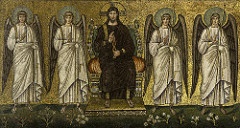
At the heart of the Gospel is a huge dilemma that may seem insurmountable, a major quandary that could appear insoluble, and it is this: How can a righteous God declare the guilty innocent?
A taxi driver
You may have followed the Mido Macia case in South Africa. In February 2013, Mido, a taxi driver, died in a police cell hours after being handcuffed to a police van and dragged through the streets of Daveyton. Just this week the officers involved were each sentenced to 15 years in prison. The judge was largely praised and commended for passing a fair judgment. Imagine the judge said to the guilty officers, “I am a very gracious judge; even though I know you are guilty, I declare you not guilty. Even though you are unrighteous, I declare you righteous.” We would say that the judge is an unjust, immoral judge. Is God not unjust and immoral to declare guilty sinners righteous?
A Jihadi Terrorist
Suppose the planners of the Paris terror attacks were found and arrested with overwhelming evidence stacked against them. Their evil planning was caught on CCTV and they had voluntarily signed damning confessions. Now suppose the judge at the high-profile court case had said in his judgment, “I am a very gracious judge; even though I know you are guilty, I declare you not guilty.” Would we not say the judge is an unjust, immoral judge?
Yet, the Bible teaches that when guilty sinners put their faith in Jesus, God declares them not guilty and righteous (i.e. justified).
The King left his throne is heaven
Victor Kuligin relates this helpful illustration in his book, “The language of salvation”:
There was a king whose word was law and whose edicts were strictly obeyed. Three times a week he heard legal cases. One morning an old woman guilty of stealing was brought before him. The king had decreed that the punishment for stealing was the cutting off of the offender’s right hand. As the old woman was brought before the king and her crime declared, the king sank in his throne in despair.
“Is this true? Did you commit the crime?” he asked.
“Yes, I did, my lord”, she replied.
The king hesitated. He leaned forward and asked, “Mother, how can this be?” She made no reply.
The entire court was watching. If the king were to free his mother, the moral foundations of his rule would disintegrate. However, to put his mother through this terrible penalty was too much for him to bear.
Was there no way out of this dilemma and quandary?
The king stood up, removed his robe, and walked down to his mother. He walked over to where the penalty was to be executed and placed his hand on the block of wood.
God himself
God is just. He cannot not be. He did punish sin. Jesus died to bear all the punishment for all the sin of all God’s people throughout all the ages. But Jesus was not a third-party. Jesus is God the Son. The astonishing truth of the gospel is, in the memorable words of John Stott, God himself gave himself to save us from himself.
God is “just and the justifier of the one who has faith in Jesus.” (Romans 3:26) No dilemma.
Written by Andre Visagie, originally posted here.
Ordination of Jared Hey and Chris Ramsbottom
Sunday the first of November saw a joint celebration where the two morning congregations of St Stephens church gathered together. The occasion was the ordination of Jared Hey and Chris Ramsbottom by Bishop Gary Bedderson. Jared has been serving as youth pastor at St Stephens for a number of years having graduated from GWC. Chris has finished his curacy following his GWC studies and so was made deacon. He serves in an assistant capacity at St Stephens and from next year will lead the preaching at the evening congregation. It was a delight to welcome family and friends, as well as to rejoice in God’s provision in thrusting out more men into full time gospel ministry.
submitted by: Geoff Gertzen, Senior Pastor, St Stephens


Confirmation at St. James, Kenilworth
On Sunday 8th November we had the privilege of witnessing 11 teens confirm their love for our Lord Jesus. It really was a special morning as we were encouraged by the teens boldness and excitement to tell their family, friends and the rest of our congregation that they love and want to live for Jesus. Highlights of the morning were the great singing lead by our youth band, two of the confirmees sharing their testimony and Bishop Gary Bedderson’s great sermon on the value of God’s Kingdom. Please continue to pray with us for these teens, that will continue to live for our Lord Jesus and be an effective witness for Him.
Submitted by: Leighton Ronne, Youth Pastor, St James


Homosexuality is not the new black
 The issue of homosexuality and same-sex partnerships has become an even more urgent issue in South Africa now that the General Synod of the Dutch Reformed Church has voted to permit those in same-sex relationships to serve as ministers. The synod also voted to permit same-sex unions to be blessed in Dutch Reformed churches.
Thankfully the decision won’t be forced on churches. Each individual Dutch Reformed church can decide for themselves their stance towards those who practice homosexuality in same-sex partnerships. Many of those who are pleased with the synod’s decision equate discrimination towards those who practise homosexuality as essentially the same as discrimination towards black people under apartheid. For them the synod’s decision has been a great moment of liberation to be celebrated.
However, homosexuality is not the new black. According to the Bible, differences in culture and ethnicity are part of God’s good creation and are to be celebrated – even as we are united in Christ. Homosexual activity, on the other hand, (like all other sexual immorality) is not part of God’s good creation, but sinful and dishonouring to God. Ministers and denominations that say otherwise are not being loving towards those who practise homosexuality because they are endangering their souls by giving many a false assurance of a lifestyle pleasing God.
God’s Word must be our Rule
God is very much for sex as shown by his creation of humans as sexual beings that enjoy sex. God as Creator knows how best we enjoy his good gifts, including the gift of sex. From the very beginning of the Bible we see that God’s purpose is for sex to take place within the marriage of one woman with one man (Genesis 2:24). God creation purposes are evidenced in the biological differences between men and women.
Let the marriage bed be undefiled
The biblical institution of marriage is essential for the welfare of human society. The Bible warns that there will also be those who will want to redefine marriage or devalue marriage. Hebrews 14:3 says,
“Let marriage be held in honour among all, and let the marriage bed be undefiled, for God will judge the sexually immoral and adulterous.”
Sexual immorality is any and all sexual activity outside biblically defined marriage. Rather than celebrate sexual immorality – like many do – we should warn people that God’s judgement will come upon all the “sexually immoral and adulterous”.
Is homosexuality sin?
To put it simply, yes. Homosexuality is not part of God’s good plan for human beings and is an expression of our rebellion towards him. In Romans 1:18-27 the Apostle Paul views homosexuality as the ultimate expression of rebellion towards God. The practise of homosexuality turns God’s order of things upside down; much like the first sin in Genesis 3 when Adam and Eve listened to a creature not the Creator. Some “biblical” scholars have sought to re-interpret the Bible to say that God is actually pro so-called homosexual marriage or partnership. These are some of their arguments:
1. No longer applicable
Some will argue that the laws prohibiting homosexual behaviour are no longer applicable to us today as they were part of the discontinued parts of the Law of Moses (e.g. Leviticus 18:21-22, 20:13). They argue that because we do not have to keep all the Law of Moses (e.g. not eat pork, shave our beards, and not wear cotton and wool at the same time) people should also be allowed to practise homosexuality. This argument sounds convincing at first, but cannot stand. Firstly, heterosexual marriage is still God’s purpose as seen in the creation account – which comes before the Law. Secondly, the New Testament also condemns homosexual practise. Thirdly, the laws forbidding homosexuality are further implications of the seventh commandment, “You shall not commit adultery” and still very much applicable to us today. You might say that the laws against homosexuality are part of the “moral law”.
REACH South Africa‘s position paper on homosexuality says:
“We note further that this defilement (e.g. Leviticus 18:21-22, 20:13) is no mere matter of ceremonial purity but something abhorrent to God, leading to the extreme penalty. We note further that these acts are not just condemned in Israel as God‘s holy people, but brought God‘s judgement even upon Gentile people. We know of no rescinding or lessening of the seriousness of what we can only accept as part of God‘s moral law binding on all people in all cultures in all ages.”
2. No longer relevant
Others argue that the prohibitions in the Bible were culture bound and therefore no longer relevant in a modern world. For instance, in the Old Testament homosexual behaviour was linked with idolatrous cult prostitution and what the biblical author was condemning was idolatry, not homosexuality. Or they will argue that in the (intolerant, narrow-minded) New Testament author’s thinking homosexual behaviour was considered taboo; but today we are not that bigoted, so we should embrace homosexuality as a healthy, alternative lifestyle.
Both these “culture-bound” arguments can be answered by the simple observation that the biblical authors were not airing their own opinions, but based their views on sexuality to God’s purpose for human beings at creation. (Cf. Romans 1:20, 25)
3. Misunderstanding of meaning
Lastly, others argue that what the Bible forbids is homosexual abuses, like rape (e.g. a male slave owner forcing himself on a male slave) and homosexual prostitution. Hence the Bible is not against loving, consensual homosexual relationships. Again, this argument does not hold weight. The homosexual act itself is prohibited in the Bible, not simply the motive, circumstances or context in which it takes place.
Is homosexuality genetic?
Yes and no.
“Yes”, in that we are all born with a biased towards sin. We are all natural born sinners. Some may have more of a tendency towards one particular sin than other sins. One may struggle more with gluttony than with greed. One may have a greater tendency towards pride than pornography; or a tendency towards homosexuality rather than heterosexual sexual immorality (e.g. co-habitation, adultery etc).
“No”, in that there is no homosexual gene that somehow fatalistically determines your sexual orientation. One’s upbringing, circumstances, childhood and rearing (positive and negative) plays a huge role in determining one’s strengths, weaknesses, and temptation areas. But at the end of the day, we are – each one – responsible and accountable for our choices.
Is there hope for those who practise homosexuality?
Yes. In one sense homosexuality is the ultimate expression of rebellion towards God, but in another sense, the Bible treats homosexuality as it does any other sin. Consider:
Or do you not know that the unrighteous will not inherit the kingdom of God? Do not be deceived: neither the sexually immoral, nor idolaters, nor adulterers, nor men who practice homosexuality, nor thieves, nor the greedy, nor drunkards, nor revilers, nor swindlers will inherit the kingdom of God. And such were some of you. But you were washed, you were sanctified, you were justified in the name of the Lord Jesus Christ and by the Spirit of our God. (1 Corinthians 6:9-11)
Sin needs to be repented of. God forgives us our sins on the grounds of the death of Christ for us. As Christians we still sin, but our lives are marked by hatred of and turning from sin. A Christian’s life cannot be characterised by ongoing, habitual sin – whatever that sin may be. 1 John 1:6 says,
“If we say we have fellowship with him while we walk in darkness, we lie and do not practice the truth.”
Homosexual orientation vs. homosexual behaviour
You may struggle with homosexual feelings; but because you are a Christian and want to honour God, you do not act on those feelings. You are to be commended. Homosexual orientation is not a sin, bit the homosexual act is. To put it more generally: temptation is not a sin, acting on temptation is. Jesus was tempted and yet did not sin. I may be tempted to view pornography, but only when I act on the temptation does it become a sin.
Is God homophobic?
God is not homophobic, but he is holy. He hates sin – all sin. He hates homosexual sin as much as he hates pride. The awesome news of the gospel is that Jesus came to save sinners. Jesus did not come to save those who love their sin or try to justify their sin, but those who recognise they are sinners. If church leaders keep telling sinners they are not sinners, how terrible will it be for those leaders on the Day of Judgement? Jesus said it would be better for them to have a great millstone tied around their necks and be thrown into the sea (Mark 9:42).
An extract from REACH South Africa‘s position paper on homosexuality says:
“It is beholden on every true Christian to follow the plain teaching of the Word of God, and therefore to avoid homosexual activity as sin on a par with stealing, murder, and covetousness, which displeases God and makes us liable to the judgement of God.
It is beholden on every Christian, and especially ministers and teachers, to warn the unwary that such behaviour is offensive to God and bound to bring punishment.
As believers in the Christian gospel it is every Christian‘s privilege to assure those who turn to Christ from whatever sinful path into which they may have strayed that they have God‘s complete forgiveness and that they are wholly cleansed and brought into fellowship with him, and are true members of his Church.
Christian churches, denominations, and ministers are recognized by their profession of Christ as Lord and their adherence to the Word of God. Churches, denominations and ministers which advocate lifestyles in open conflict with Holy Scripture have strayed from the historic Christian Faith.
In particular, churches, denominations and ministers which by teaching, example and ordination policy declare to the world that homosexual activity is pleasing to God, when God‘s Word declares it evil and sufficient to exclude people from God‘s kingdom, endanger people‘s souls, and should be avoided by Christian people.”
Written by Andre Visagie, originally posted here.
The views and opinions expressed in these articles are those of the authors and do not necessarily reflect the official position or standpoint of the Reformed Evangelical Anglican Church of South Africa.
The Scandal of Jesus
 In contrast to the speeches of Pope Francis, that everyone applauds and welcomes, Jesus’ words often upset and offended people, particularly religious people. The account of Jesus’ healing of the Roman centurion’s servant is just such an outrageous occasion. At our church’s official opening service on Sunday Bishop Glenn Lyons reminded us of two provocative, scandalous statements Jesus made.
The scandal of faith
Jesus said, “Truly, I tell you, with no one in Israel have I found such faith.” (Matthew 8:10)
What makes this statement scandalous is that Jesus was speaking to the Roman centurion, in the hearing of the Jewish crowd. The Romans were the Gentile occupying force in what was supposed to be a Jewish-ruled land. Most Jewish people back then despised Gentiles, particularly the Romans who ruled over them. Were not the Jews chosen by God? Was not the Jewish king meant to rule over the nations from Jerusalem? And yet, here was Jesus commending the captain of the Gentile army for his faith – faith that Jesus had not yet seen in Israel! It would be tantamount to the Bishop of Baghdad commending the ISIS commander for his faith.
What had happened was that the centurion had recognised Jesus for who he was and had responded in the appropriate manner.
But the centurion replied, “Lord, I am not worthy to have you come under my roof, but only say the word, and my servant will be healed. For I too am a man under authority, with soldiers under me. And I say to one, ‘Go,’ and he goes, and to another, ‘Come,’ and he comes, and to my servant, ‘Do this,’ and he does it.” When Jesus heard this, he marvelled and said to those who followed him, “Truly, I tell you, with no one in Israel have I found such faith. (Matthew 8:8-10)
The centurion knew that Jesus was a man with authority who spoke words of authority. If Jesus said something, it was as good as done. No need for a fanfare, Jesus just had to speak the word. Because of this, Jesus is the one man in history we cannot ignore.
Have you recognised Jesus for who he is? Not a prophet, or good man, or healer, but God the Son? Have you responded appropriately? Not by liking the “Jesus” Facebook page, but by obeying his word to repent and believe the gospel? As a Christian, is Jesus’ word enough for you or do you hanker after more fanfare and “power” experiences?
The scandal of grace
Jesus said, “I tell you, many will come from east and west and recline at table with Abraham, Isaac, and Jacob in the kingdom of heaven, while the sons of the kingdom will be thrown into the outer darkness. In that place there will be weeping and gnashing of teeth.” (Matthew 8:11-12)
What makes this statement scandalous was that Jesus was speaking to religious (Jewish) people who thought that because of their privileges they would no doubt be welcomed to the feast in the coming kingdom of God. Jesus is warning against presumption. It’s not about race, it’s about grace. Rather than God judging the Gentiles, many Gentile – including Roman centurions – would be at the feast of God with the Old Testament’s great believers. What a shocking statement. Many Brazilians, South Africans and Indians will be joining Abraham, Isaac and Jacob too. And many religious people, who presumed that they would be there, won’t be there.
Will you be at the feast of God? Do you presume to be there? Do you presume to be there because of your family, your culture, your upbringing, your baptism, your church membership, your church attendance, your Anglicanism, or because your uncle was a minister? It’s not about race, or culture, or who you know, it’s about grace. It all depends on whether you, by God’s grace, recognise Jesus and respond appropriately to him.
Jesus said scandalous things. Jesus offended many. Jesus’ words caused him to be put to death. But this was all part of God’s plan. Jesus rose from the dead and now reigns and rules from heaven. Jesus will return to preside over the feast of God.
You can listen to Bishop Glenn Lyons’ sermon here.
Written by Andre Visagie, originally posted here.
Why the world is like it is
The age-old question that has for hundreds of years vexed philosophers, theorists, social-scientists, and all thinking people, is this: why is the world like it is?
Think about all the greed, the road rage, the human trafficking, the extra-marital affairs, the exploitation of women in pornography, the bullying in primary schools, the rape and murder of the 15 year old in Masiphumelele this last week, the rich directors of mining houses who exploit their workers, the greedy FIFA executives charged with corruption, and the list never ends.
Why is the world like it is, that is the question that no one can answer.
Human atrocities
In World War II, which lasted 6 years, 1939-1945, most historians estimate that 75 million people died, including military personnel and civilians.
Many of the civilians died because of deliberate genocide, massacres, mass-bombing and starvation. Human beings died directly and indirectly at the hands of other human beings. In 1945 the United Nations was established to be a gathering of nations so that there would be no more wars. There has been more war since the establishment of the UN that before.
Why is the world like it is? Why is there so much sin and evil and exploitation in the world and, if we are honest, in our own hearts?
Alternative theories
Secular humanists would say it’s because of a lack of education. Buddhists would say it’s because of a failure to find oneself. Behaviourists would say it’s because of lack of nurture by parents. Evolutionists would say that it’s the inevitable outcome of our inbuilt instinct for the survival of the fittest. Typically religious people would say it’s because we’re not trying hard enough to be nice. Many people growing up in our post-modern world, where there is no absolute truth, would not even know where to start to answer the question.
Why is world like it is today?
Suppressors and exchangers
The Bible gives us the answer, particularly in Romans 1:18-32. The answer is not what most people want to hear; it’s not very politically correct. You see, the Bible is the only book in our world that is able to tell us why the world is like it is. The Bible is fundamentally a realistic book: it calls a spade a spade; it tells it like it is
According to the Bible, and particularly Romans 1, the world is like it is because human beings have suppressed the truth about God (v18) and have exchanged the worship of the one True God for created things (v21-23). God has handed us over to our own desires (v24, 28-31) and we are now under God’s wrath (v18). This is not the politically correct answer, but this is reality.
The gospel, however, provides a way for us to be declared righteous and escape God’s wrath. If we don’t understand the bad news of the human predicament and God’s wrath, we won’t appreciate the good news of the gospel.
The full exposition of Romans 1:18-32 is here.
Written by Andre Visagie, originally posted here.